
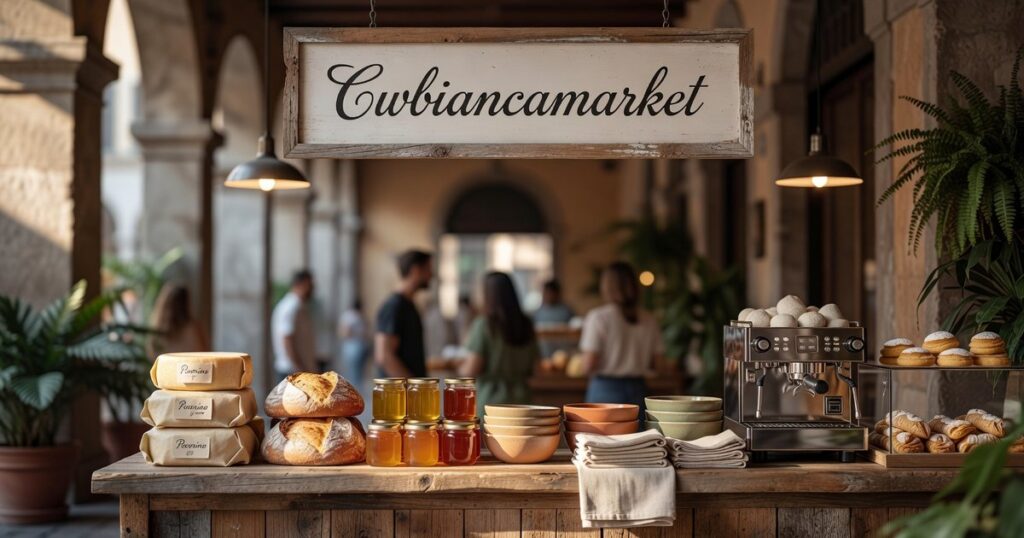
I’ve seen too many talented artists treat their craft like a hobby when it could be paying their bills.
You’re probably here because you heard about Bianca’s marketplace and want to know if it’s worth your time. Or maybe you’re already selling but can’t figure out why you’re not making real money.
Here’s the thing: most creators fail at the business side. They price too low, they don’t understand their market, and they have no financial plan.
I spent years watching artisans struggle with this transition. The ones who make it? They treat their art like a business from day one.
This guide breaks down cwbiancamarket as more than just another place to list your handmade goods. I’ll show you how to use it as a real business tool.
We focus on the financial side of creative work. The pricing models that actually work. The market positioning that gets you noticed. The budget planning that keeps you afloat.
You’ll learn how to turn your passion project into something that generates consistent income. Not overnight riches. Just a solid foundation for growth.
No fluff about following your dreams. Just the business strategies you need to make this work.
What is Bianca’s Marketplace? A Strategic Overview for Creators
You’ve probably heard about Bianca’s Marketplace by now.
Maybe a friend mentioned it. Or you saw someone posting about their sales numbers and thought, “Should I be selling there too?”
Here’s what most people get wrong about Bianca’s. They think it’s just another place to list your stuff.
It’s not.
I learned this the hard way when I first started analyzing marketplace platforms. I assumed all handmade marketplaces were basically the same. Just pick the one with the most traffic and call it a day.
That thinking cost creators I know thousands in lost opportunities.
Why Bianca’s is Different
Bianca’s isn’t trying to be Etsy. It’s not competing with Amazon Handmade on volume.
The platform curates. Hard.
They only accept handmade crafts and original artwork that fit a specific aesthetic. Think quality over quantity. The kind of stuff people actually want to display in their homes, not just impulse buys.
Some sellers argue this exclusivity is a problem. They say it limits your reach and makes it harder to get accepted in the first place.
Fair point.
But here’s what that criticism misses. The customers on Bianca’s want that curation. They’re tired of scrolling through pages of mass-produced items labeled as “handmade.” They come to Bianca’s specifically because someone already did the filtering for them.
That changes everything about how you should think about selling there.
When I talk to creators at cwbiancamarket, I tell them the same thing. Listing on Bianca’s isn’t a simple yes or no decision. It’s an investment.
You’re investing in access to buyers who value craftsmanship. People who understand why your hand-thrown pottery costs more than something from a big box store. Customers who will pay a premium because they get it.
That’s worth more than raw traffic numbers.
Market Diversification: Finding Your Profitable Niche Within Bianca’s Ecosystem
You’ve probably heard this before.
Go narrow. Pick a niche. Stop trying to sell everything to everyone.
But when you’re staring at your product line, that advice feels impossible. You think specializing means leaving money on the table.
Here’s what most artisans believe: casting a wide net catches more fish. If you make pottery, why limit yourself to just mugs when you could also sell vases, planters, and bowls?
I used to think the same way.
But the data tells a different story. When you try to be everything, you become nothing. Your brand gets lost in a sea of other generalists fighting over the same customers.
The real benefit of niching down? You stop competing on price alone.
Think about it. When someone searches for “pottery,” they see thousands of results. But when they search for “minimalist ceramic kitchenware,” the field narrows fast. You’re not just another potter anymore. You’re the person for that specific thing.
And here’s what happens next. You can charge more. Your marketing gets easier (you know exactly who you’re talking to). Your material costs drop because you’re ordering the same supplies repeatedly instead of buying random bits for different projects.
Let me show you what this looks like in practice.
I looked at two shops on Cwbiancamarket. Both started around the same time. Both had similar skill levels.
Shop A sold “handmade pottery.” Their products ranged from garden gnomes to dinner plates. Average item price: $28. Monthly revenue after six months: around $1,200.
Shop B sold “minimalist ceramic kitchenware for small space living.” Just mugs, small bowls, and compact storage jars. Average item price: $45. Monthly revenue after six months: $3,800.
Same effort. Different focus.
The specialized shop didn’t just make more money. They spent less time answering customer questions because their audience knew exactly what they were getting. Shipping was simpler (similar sized boxes every time). And they built a reputation fast.
So how do you pick your niche?
Start with what you already make well. Then ask yourself three questions.
Is there demand? Check search volumes and competitor sales. If nobody’s looking for it, you’ll struggle.
Can you make it profitably? Factor in materials, time, and shipping. Some beautiful products just don’t pencil out.
Does it solve a specific problem? The tighter the problem, the easier your marketing becomes. “Jewelry” is vague. “Hypoallergenic earrings for sensitive skin” speaks to someone’s exact pain point.
Right now, I’m seeing strong growth in a few areas. Sustainable home goods are moving well, especially if you can prove your materials are genuinely eco-friendly (not just greenwashed marketing speak). Bespoke jewelry that tells a story or marks a milestone keeps selling. Personalized digital art is exploding because people want unique Zoom backgrounds and social media content. As I explore the latest trends in gaming merchandise on my Homepage, it’s clear that personalized digital art and bespoke items are captivating audiences like never before. As I explore the latest trends on the of various online marketplaces, it’s clear that personalized digital art is thriving alongside bespoke jewelry and sustainable home goods that prioritize genuine eco-friendliness.
But here’s the thing. Don’t just jump into what’s hot. Pick something that matches your skills and has room to grow.
You want to find the overlap between what you’re good at, what people will pay for, and what you can actually deliver without burning out.
The benefit you get from this approach? You build authority fast. When you’re known for one thing, word spreads. Customers start seeking you out instead of you chasing them down.
And when you’re ready to expand? You do it strategically. That minimalist kitchenware shop eventually added serving pieces. But they waited until they owned their core niche first.
Your next step is simple. Look at your current products and ask: what could I cut? What single category could I own completely?
The answer to that question might just change everything about how you budget easily cwbiancamarket and plan your inventory going forward.
Specializing feels risky. But staying general? That’s the real gamble.
Advanced Pricing: Capital Risk Models for Handmade Goods
I used to price my work like most makers do.
Materials plus time plus a little extra. Simple math that felt safe.
Then I watched a customer spend twenty minutes staring at one of my pieces. She kept coming back to it. Finally bought it without even asking the price.
That’s when I realized I’d been doing this all wrong.
Cost-plus pricing doesn’t work for handmade goods. When you just add a markup to materials, you’re telling customers your skill doesn’t matter. Your years of practice? Worthless. The vision that nobody else could execute? Not worth paying for.
You’re basically saying you’re interchangeable with anyone who can buy the same supplies.
Here’s what actually matters.
Value-based pricing starts with what your work means to the person buying it. A wedding commission isn’t worth your hourly rate times materials. It’s worth what that couple will pay to have their exact vision come to life on the most important day of their year.
Your brand story matters too. If you’ve spent a decade mastering a technique, that’s part of the value. If you source materials ethically or use methods nobody else in your area uses, that changes what people will pay.
I learned this at cwbiancamarket when analyzing how creators actually build sustainable income. The ones who thrive don’t just cover costs. They understand their market.
But let’s talk about risk.
Every piece you make represents capital you’ve put at risk:
• Materials you’ve already paid for
• Hours you can’t get back
• Inventory that might not sell
This is real money. If a $200 piece sits unsold for six months, you’ve lost the opportunity to use that $200 somewhere else.
So how do you protect yourself?
Made-to-order work eliminates most inventory risk. You only create after someone pays. The downside? Longer wait times and you can’t sell on impulse at markets.
Limited runs work better for some makers. Create ten pieces, sell them, move on. If they don’t sell fast, you know the market isn’t there.
Here’s the model that actually works.
Offer products at different price points. Not because you’re trying to trick anyone, but because different customers have different budgets and different needs.
Small items at $30 to $75 capture impulse buyers and people just discovering your work. Mid-range pieces at $150 to $400 are where most of your volume happens. High-end commissions or originals at $800 and up are for collectors and special occasions.
This isn’t about selling out. It’s about staying in business long enough to keep making what you love.
I’ve seen too many talented makers quit because they couldn’t figure out the money part. They weren’t bad at their craft. They just never learned to price like a business instead of a hobby.
The Artisan’s Budget: Financial Planning for Marketplace Success
You can’t run a creative business on vibes alone.
I see it all the time. Talented makers who create beautiful work but have no idea if they’re actually making money. They look at their bank account and think they’re doing fine until tax season hits or they need to restock materials.
Then everything falls apart.
Some people will tell you that budgets kill creativity. That tracking every dollar turns your passion into a corporate job. And I get why that sounds appealing.
But here’s what actually happens when you skip the numbers.
You run out of materials mid-project. You can’t afford the packaging you need. You end up working for less than minimum wage without even realizing it.
The truth? A simple budget gives you more creative freedom, not less. Because you know exactly what you can afford to experiment with.
Let me show you what actually works.
Start with these core line items:
| Budget Category | What It Covers | Why It Matters |
|---|---|---|
| —————– | —————- | —————- |
| Platform Fees | Bianca’s commission, payment processing | Comes out automatically |
| Materials | Raw supplies, tools, replacements | Your biggest variable cost |
| Packaging & Shipping | Boxes, tape, labels, postage | Often underestimated |
| Marketing | Product photos, ads, promotions | Gets your work seen |
| Your Salary | What you actually take home | You need to eat too |
That last one trips people up the most.
You need to pay yourself. Not just take whatever’s left over at the end of the month. Set an actual number and treat it like any other expense. I go into much more detail on this in How to Start a Low Budget Cwbiancamarket.
Now here’s something most creators don’t think about. Cash flow and profit are not the same thing.
You might be profitable on paper but still run out of money. How? You spent $500 on materials in January but won’t sell those products until March. Your profit looks great but you can’t buy groceries in February.
This is why I recommend keeping at least one month of material costs in reserve. It smooths out those gaps between spending and selling.
The good news is you don’t have to guess at any of this. Check your cwbiancamarket sales data regularly. Look at what sold last month and what that pattern tells you about next month.
Most platforms show you daily sales, traffic patterns, and seasonal trends. Use that information. If December is always your biggest month, start buying materials in October. If summer is slow, don’t overstock in June. To navigate the complexities of seasonal sales and inventory management, consider strategies such as analyzing traffic patterns and utilizing resources that address the question, “How Can You Budget Easily Cwbiancamarket,” to optimize your purchasing decisions throughout the year. To navigate the complexities of seasonal sales and inventory management, consider strategies that answer the vital question: How Can You Budget Easily Cwbiancamarket, ensuring you capitalize on peak times while avoiding unnecessary stock during slower periods.
Track your actual numbers for three months. Then you’ll know what your real costs are, not what you think they should be. Adjust from there.
Simple beats complicated every time.
Build a Brand, Not Just a Product
You didn’t come here to stay small.
cwbiancamarket exists because artisans deserve better than hoping their work sells itself. You need a real business strategy.
The marketplace gives you the platform. But strategy is what turns your craft into a sustainable brand.
I’ve shown you how market positioning, risk management, and financial planning work together. These aren’t corporate buzzwords. They’re the difference between selling occasionally and building something that lasts.
Here’s your next move: Look at your products through a strategic lens. Ask yourself what problem they solve and who’s willing to pay for that solution. Then price accordingly.
Stop treating your craft like a hobby if you want business results.
Your work has market potential. Now go unlock it. Strategies Cwbiancamarket. How to Start a Low Budget Cwbiancamarket.
 Norvain Droshar writes the kind of market diversification approaches content that people actually send to each other. Not because it's flashy or controversial, but because it's the sort of thing where you read it and immediately think of three people who need to see it. Norvain has a talent for identifying the questions that a lot of people have but haven't quite figured out how to articulate yet — and then answering them properly.
They covers a lot of ground: Market Diversification Approaches, Financial Buzz, Expert Breakdowns, and plenty of adjacent territory that doesn't always get treated with the same seriousness. The consistency across all of it is a certain kind of respect for the reader. Norvain doesn't assume people are stupid, and they doesn't assume they know everything either. They writes for someone who is genuinely trying to figure something out — because that's usually who's actually reading. That assumption shapes everything from how they structures an explanation to how much background they includes before getting to the point.
Beyond the practical stuff, there's something in Norvain's writing that reflects a real investment in the subject — not performed enthusiasm, but the kind of sustained interest that produces insight over time. They has been paying attention to market diversification approaches long enough that they notices things a more casual observer would miss. That depth shows up in the work in ways that are hard to fake.
Norvain Droshar writes the kind of market diversification approaches content that people actually send to each other. Not because it's flashy or controversial, but because it's the sort of thing where you read it and immediately think of three people who need to see it. Norvain has a talent for identifying the questions that a lot of people have but haven't quite figured out how to articulate yet — and then answering them properly.
They covers a lot of ground: Market Diversification Approaches, Financial Buzz, Expert Breakdowns, and plenty of adjacent territory that doesn't always get treated with the same seriousness. The consistency across all of it is a certain kind of respect for the reader. Norvain doesn't assume people are stupid, and they doesn't assume they know everything either. They writes for someone who is genuinely trying to figure something out — because that's usually who's actually reading. That assumption shapes everything from how they structures an explanation to how much background they includes before getting to the point.
Beyond the practical stuff, there's something in Norvain's writing that reflects a real investment in the subject — not performed enthusiasm, but the kind of sustained interest that produces insight over time. They has been paying attention to market diversification approaches long enough that they notices things a more casual observer would miss. That depth shows up in the work in ways that are hard to fake.