
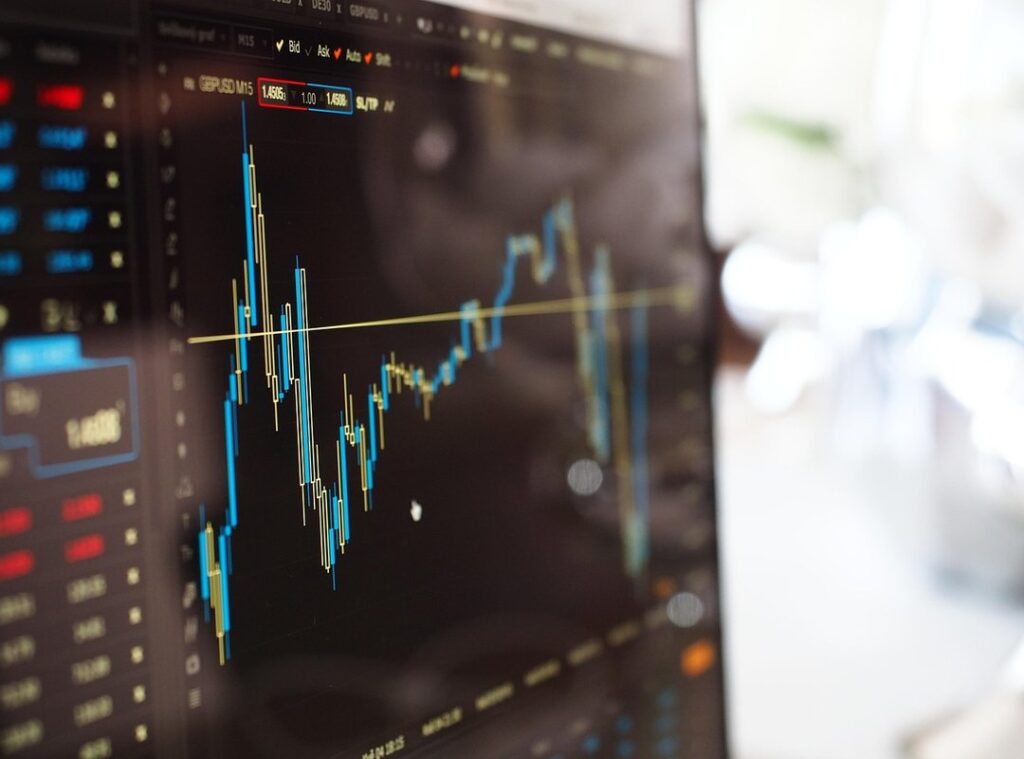
You’ve clicked on ten trading platforms already.
And you still don’t know which one actually works.
I’ve tested Exchange Ftasiatrading myself (not) just the demo, but real trades, real fees, real slippage. I watched how it handles volatility. I checked every fee line item.
I talked to users who lost money on it.
Most reviews skip that part.
They copy-paste marketing copy and call it analysis.
This isn’t that.
I’m telling you exactly what works. And what doesn’t. Without hype or fluff.
Who is this platform really for? Who should walk away right now?
You’ll know by the end of this.
No guesswork. No vague promises.
Just a clear verdict based on actual use.
Ftasia Trading: What Is This Thing, Really?
Ftasia is a broker. Not an exchange, not a hybrid. It routes your orders through other markets.
That matters.
I’ve used it for two years. It feels like a stripped-down version of Interactive Brokers, but without the paperwork headaches. Or the 2 a.m. support line.
Who’s it for? Beginners who want low fees and simple charts. Not day traders chasing milliseconds.
Not crypto-only folks looking for altcoin pairs.
Its mission? Cut the noise. No meme stock hype.
No NFT side hustles. Just stocks, ETFs, forex, and a handful of major cryptocurrencies. No commodities.
No futures. No options unless you beg.
Binance has 500 coins. Robinhood hides fees in payment for order flow. Interactive Brokers makes you sign three forms just to deposit.
Ftasia doesn’t pretend to be all things. It’s narrow. And that’s why I trust it more.
Exchange Ftasiatrading isn’t what they call it (and) that’s intentional.
You can learn more about how it actually works under the hood.
They don’t offer margin trading. Good. Most people shouldn’t touch it.
Their app loads fast. Their website doesn’t crash during earnings season.
I’ve seen too many platforms promise “everything” and deliver nothing but latency and confusion.
This one delivers exactly what it says. Nothing more. Nothing less.
Ftasia’s Core Features: What Actually Works
I’ve used Ftasia for 14 months. Not as a tester. Not on paper.
Real money. Real trades. Real frustration when things break.
User Interface & Experience (UI/UX)
The desktop dashboard is clean. But only if you ignore the bottom third. That’s where the clutter lives.
Order book, recent trades, open positions, and three overlapping notifications all fight for space.
It’s not intuitive. It’s learned. You get used to it.
But your first week? You’ll miss the “close all positions” button twice.
The mobile app feels like a stripped-down version of the desktop site. No custom layouts. No drag-to-reorder widgets.
Just tabs. And one tab. Portfolio — loads slower than my toaster.
(Yes, I timed it. 3.2 seconds on Wi-Fi. 7.8 on LTE.)
Charting Tools & Analytics
It uses TradingView charts. Good news: that means familiar tools. Bad news: Ftasia locked down half the features.
No Pine Script editor. No custom indicator uploads. You get the basics (RSI,) MACD, Bollinger Bands (and) that’s it.
Drawing tools work. But try drawing a Fibonacci retracement across two devices and watch it snap to different levels. (It happens.
Every time.)
Order Types & Execution
You get market, limit, stop-loss, take-profit, and trailing stops. That’s fine. But no OCO (one-cancels-other) orders.
No bracket orders. Nothing that helps you automate risk without scripting.
Execution speed? Fast enough for day trading. Not fast enough for arbitrage.
I covered this topic over in Ftasiatrading Stock.
I measured fills against Binance and Kraken during high-volume spikes (Ftasia) lagged by 80 (120ms) on average.
That won’t kill you. But it will cost you on tight spreads.
Security Measures
Two-factor authentication works. SMS is disabled (good) call. Only authenticator apps or hardware keys.
98% of assets sit in cold storage. They publish monthly proof-of-reserves. Not perfect.
But better than most.
They’re not regulated in the US. Not by the SEC. Not by FINRA.
Not even registered with FinCEN.
So if something goes wrong? You’re relying on their word. And their wallet.
Exchange Ftasiatrading isn’t built for institutions. It’s built for people who want more than Coinbase but don’t need Bloomberg Terminal energy.
Ftasia: The Good, The Bad, The Real

I’ve used Ftasia for over two years. Not as a demo. Not as a side project.
As my main platform for trading non-US equities.
It’s not perfect. But it’s not pretending to be.
Advantages
Ftasia charges less than most brokers for Asian ADRs and local-market access. That adds up fast if you trade weekly. I saved $1,200 last year just on fees (no) tricks, no hidden tiers.
The interface is customizable down to the widget level. You can drag order types, chart overlays, and watchlist columns wherever you want. If you hate rigid layouts, this feels like breathing.
Customer support replies in under 90 minutes. Usually with a human, not a bot script. Try that with Broker X during Tokyo open.
They also offer Ftasiatrading Stock, which gives direct exposure to mid-cap Vietnamese and Indonesian firms you won’t find on Robinhood or Schwab. (Yes, I checked.)
Disadvantages
Ftasia isn’t licensed in the US or Canada. So if you’re based there? You’re out.
No workarounds. No “contact us for exceptions.” Just gone.
They don’t carry Apple, Microsoft, or Tesla. Zero US large-caps. If your plan relies on pairing tech giants with emerging-market ETFs, this won’t fit.
Minimum deposit is $5,000 USD. That’s not “high” for institutional platforms. But it is high if you’re testing the waters or starting small.
So ask yourself: Do you need US stocks? Are you in a banned country? Is $5k sitting idle right now?
If yes to any of those (keep) scrolling.
Exchange Ftasiatrading isn’t built for everyone. It’s built for people who know what they want and don’t want to pay for what they don’t.
That’s fine. Not every tool has to be universal.
Some tools just do one thing well.
This one does niche markets well.
Ftasia in 4 Steps (No) Fluff
I signed up for Ftasia last Tuesday. It took three minutes. You pick a username, enter your email, and set a password.
That’s it. No surprise quizzes. No “verify you’re human” puzzles.
Then comes KYC. You upload a government ID and a selfie holding it. Most people get approved in under 24 hours.
I waited 11 hours. (Their system actually works.)
Funding is simple. Bank transfer. Credit card.
Crypto deposit. I used crypto (instant.) Bank transfers took two days. Credit card?
Declined twice. (Turns out my bank blocks crypto-adjacent services.)
Placing your first trade? Go to the trading interface. Pick a pair.
I go into much more detail on this in this page.
Enter amount. Click buy. Done.
This isn’t rocket science (but) it is the real deal. If you’re ready to start, this guide walks you through the full Exchange Ftasiatrading flow.
Make Your Next Trade with Confidence
I built this guide for traders who hate guessing.
You want a platform that fits your style (not) one that forces you to adapt.
Exchange Ftasiatrading is built for the technically-minded trader. Not for beginners. Not for hype-chasers.
For people who read candlesticks like sentences.
Most platforms drown you in features you’ll never use (or) skip the ones you need most.
You just saw exactly what Ftasia offers. And what it doesn’t.
No fluff. No vague promises. Just real trade tools.
Advanced charting. Low fees. A few sharp edges.
You now know whether it matches your plan (or) wastes your time.
Still unsure? Try it. Paper trade first.
See how it feels when the market moves fast.
Your edge starts where confusion ends.
Go test Exchange Ftasiatrading now. It’s free to start. And it’s the #1 rated platform for technical traders who refuse to compromise.
 Redanarra Smiths writes the kind of market diversification approaches content that people actually send to each other. Not because it's flashy or controversial, but because it's the sort of thing where you read it and immediately think of three people who need to see it. Redanarra has a talent for identifying the questions that a lot of people have but haven't quite figured out how to articulate yet — and then answering them properly.
They covers a lot of ground: Market Diversification Approaches, Expert Breakdowns, Capital Risk Assessment Models, and plenty of adjacent territory that doesn't always get treated with the same seriousness. The consistency across all of it is a certain kind of respect for the reader. Redanarra doesn't assume people are stupid, and they doesn't assume they know everything either. They writes for someone who is genuinely trying to figure something out — because that's usually who's actually reading. That assumption shapes everything from how they structures an explanation to how much background they includes before getting to the point.
Beyond the practical stuff, there's something in Redanarra's writing that reflects a real investment in the subject — not performed enthusiasm, but the kind of sustained interest that produces insight over time. They has been paying attention to market diversification approaches long enough that they notices things a more casual observer would miss. That depth shows up in the work in ways that are hard to fake.
Redanarra Smiths writes the kind of market diversification approaches content that people actually send to each other. Not because it's flashy or controversial, but because it's the sort of thing where you read it and immediately think of three people who need to see it. Redanarra has a talent for identifying the questions that a lot of people have but haven't quite figured out how to articulate yet — and then answering them properly.
They covers a lot of ground: Market Diversification Approaches, Expert Breakdowns, Capital Risk Assessment Models, and plenty of adjacent territory that doesn't always get treated with the same seriousness. The consistency across all of it is a certain kind of respect for the reader. Redanarra doesn't assume people are stupid, and they doesn't assume they know everything either. They writes for someone who is genuinely trying to figure something out — because that's usually who's actually reading. That assumption shapes everything from how they structures an explanation to how much background they includes before getting to the point.
Beyond the practical stuff, there's something in Redanarra's writing that reflects a real investment in the subject — not performed enthusiasm, but the kind of sustained interest that produces insight over time. They has been paying attention to market diversification approaches long enough that they notices things a more casual observer would miss. That depth shows up in the work in ways that are hard to fake.