
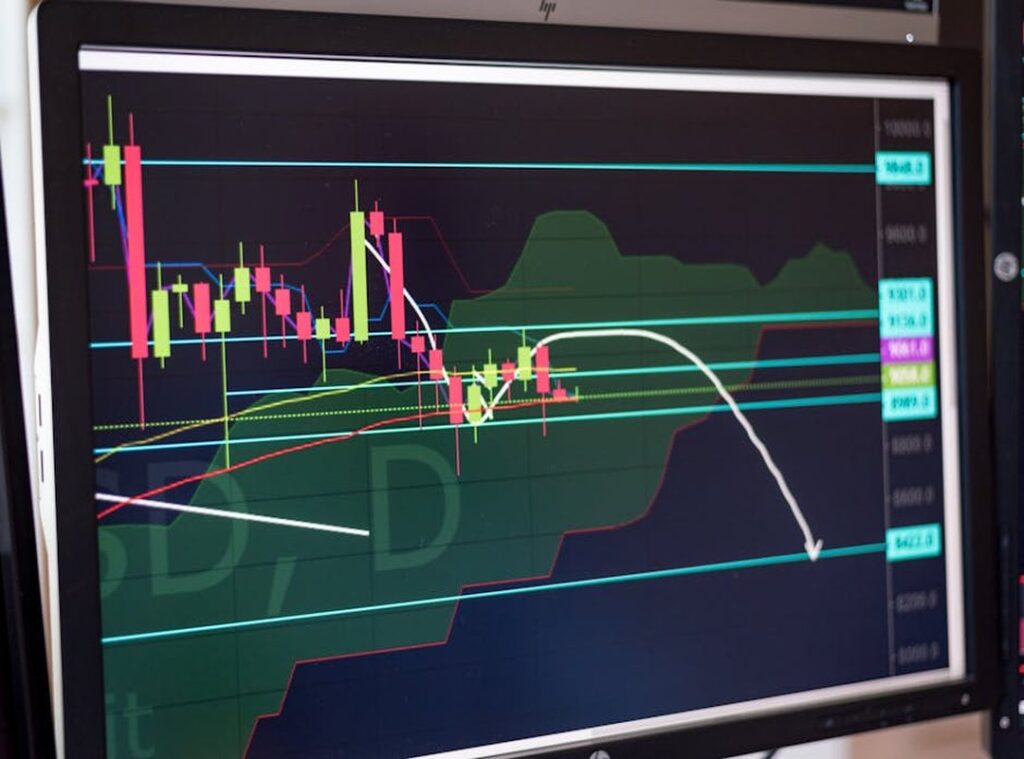
Feeling overwhelmed by financial news and all those charts? I know the feeling. Markets are a mess of buzzwords and numbers that make your head spin.
It can be tough to see what’s important and what’s just noise. You want to make smarter decisions with your money, but where do you even start?
That’s exactly what this guide is about. I’ve spent years analyzing market data, not just for big corporations but for my own investments (and trust me, I’ve made my fair share of mistakes). You don’t need a finance degree to get this right.
This article will walk you through a step-by-step system for market signals analysis. You’ll learn to perform a market trends assessment with confidence. By the end, you’ll have a real skill that empowers any investor.
Ready to dive in?
Market Trends: More Than Just Wall Street Gossip
Market trends are like watching the tide come in, not just a single wave crashing on the shore. You see, a trend is a long-term shift (like the move to renewable energy), while a fad is a short blip (think meme stocks). So, when we talk about market trends, we’re not just watching the latest craze.
Now, the “assessment” part isn’t about peering into a crystal ball. It’s about gathering evidence to make an educated guess on where things are heading. It’s like playing detective, but with numbers and patterns.
Does this sound daunting? It doesn’t have to be.
Here’s why it’s key. This skill helps investors and small business owners avoid costly mistakes. Imagine buying into a fad you thought was a trend.
Painful, right? And spotting opportunities early is like having a winning lottery ticket before the draw.
Market signals analysis is your friend here. Without it, you’ll miss the subtle signs that separate a lasting wave from a passing ripple. For deeper dives into this, check out expert takeaways navigating financial markets.
You don’t need to be on Wall Street to make smart moves.
Spotting Real Trends: Your 4-Step System
Alright, let’s get into it. This is where the magic happens. A simple process but one with some oomph, if you ask me.
Let’s break down how you actually spot and analyze trends (and not get lost in the noise).
Step 1: Gather Your Clues (Where to Look).
You know what they say, you can’t solve a mystery without clues. Start with industry reports. I’m talking about those hefty documents that people usually ignore.
They’re gold mines. Then there’s consumer behavior data. Ever notice what’s flying off the shelves lately?
That’s a clue. Technological advancements are another biggie. Think about how AI isn’t just in movies anymore.
It’s becoming a part of our daily lives. You need a variety of sources, or you’ll miss the real picture.
Step 2: Connect the Dots (Identifying Patterns).
Once you have your clues, it’s time to play detective. Look for patterns. Are people suddenly obsessed with eco-friendly products?
Maybe there’s a common issue those products are solving. Remote work is a classic example. Notice how people spending more time at home led to a spike in home office equipment sales?
That’s a pattern. You need to ask yourself, what’s the underlying trend here? Patterns are everywhere if you know where to look.
Step 3: Test Your Theory (Is It a Fad or a Fundamental Shift?).
Here’s where things get real. You gotta test your theory. Ask the tough questions.
Is this trend solving a real, ongoing problem? If big money is pouring in (venture capitalists love a good trend), that’s another clue. Is it growing steadily over months, not just a flash in the pan?
Fads fade, but real trends stick. It’s like fashion. Neon leg warmers might make a comeback but are they solving any problems?
Yeah, no.
Step 4: Assess the Impact (What It Means for You).
Now that you’ve spotted a trend, what does it mean for you? Could it affect your career, your investments, maybe even your industry? If you’re in tech and there’s a trend toward automation, you might want to pay attention.
Opportunities and risks both need your attention here. Think of it like a game of chess. Every move you make could open up new strategies (or) trap you.
By the way, if you want to dive deeper into this, check out the market signals analysis. It’s a solid resource. Pro tip: Trust your gut, but back it up with data.
That’s the secret sauce.
So there you have it. Spotting trends isn’t just about reading headlines. It’s about digging deeper, connecting dots, and asking the right questions.
It’s about being in the know and staying ahead before everyone else catches on. Ready to spot your next trend?
Free Tools for Market Signals: Your DIY Kit
You want to dive into market signals analysis but don’t know where to start? I’ve got you covered with some solid tools. First up, Google Trends.

It’s like peeking into the world’s collective mind. You can compare search interest over time. Imagine you’ve been wondering about ‘electric cars’ vs. ‘gas cars’.
Over the last five years, you’ll see how interest spikes and fades. It’s an eye-opener, really.
Next, let’s talk about Public Company Investor Relations Pages. These aren’t just for Wall Street types. Every public company releases detailed reports (seriously, it’s a treasure trove).
Just go to their website and find the ‘Investor Relations’ section. You’re looking for discussions on future trends. It’s like getting a sneak peek into their plan.
Now, don’t sleep on Government Data Websites. They’re solid sources, like the Bureau of Labor Statistics. They provide reliable data on employment, spending, and population shifts.
It might sound intimidating, but it’s not. These sites are set up to be user-friendly (a bit like reading a basic map).
On to Social Listening. This isn’t just about sifting through hashtags. Platforms like Reddit have specific subreddits where ideas are percolating.
Look for recurring problems or desired solutions. You’re not chasing hype here. You’re identifying patterns.
That’s the smart way to do it.
If you need more takeaways, check out Understanding Economic Indicators Experts. It’s a great resource for getting deeper into the nitty-gritty.
You don’t need fancy software to start analyzing market signals. These tools are free and effective. It’s all about knowing where to look and what to look for.
You’ll be surprised how much you can learn with just a little digging.
Avoiding Fads: Spotting Real Trends
I get it. The world is noisy, and spotting real trends is like finding a needle in a haystack. But guess what?
It’s easy to get caught up in the hype. Confirmation bias is a sneaky culprit. You see what you want, ignoring facts that might poke holes in your beliefs. Ever been there?
I have. Start by actively seeking information that challenges your views. It’s uncomfortable but necessary.
Then there’s analysis paralysis. I’ve fallen into this trap too. You gather data until you’re drowning in it, never making a move.
Finally, never ignore the “why.” A trend without a strong reason behind it is just a fad in disguise. I’ve seen many fizzle out because no one asked why they mattered. So, always dig deeper.
Set a deadline for your market signals analysis. Decide based on what you’ve got, even if it’s imperfect.
Why is this trend happening? If you can’t answer, it might be time to move on.
Turn Chaos into Clarity
Feeling lost in the market madness? I get it. It’s confusing, like guessing at roulette.
But guess what? You’ve cracked it now. With a straightforward, 4-step system, you’re set to tackle market signals analysis head-on.
No more chasing headlines or hoping for luck.
Stop stressing about decision-making. Just pick one area (an) industry or a specific stock. And dive in this week.
The system’s got your back. You’re not alone, either; join countless others who’ve turned noise into opportunity. Ready to see results?
Try it now. It’s time to transform confusion into confidence. Your market insight starts today.
 Norvain Droshar writes the kind of market diversification approaches content that people actually send to each other. Not because it's flashy or controversial, but because it's the sort of thing where you read it and immediately think of three people who need to see it. Norvain has a talent for identifying the questions that a lot of people have but haven't quite figured out how to articulate yet — and then answering them properly.
They covers a lot of ground: Market Diversification Approaches, Financial Buzz, Expert Breakdowns, and plenty of adjacent territory that doesn't always get treated with the same seriousness. The consistency across all of it is a certain kind of respect for the reader. Norvain doesn't assume people are stupid, and they doesn't assume they know everything either. They writes for someone who is genuinely trying to figure something out — because that's usually who's actually reading. That assumption shapes everything from how they structures an explanation to how much background they includes before getting to the point.
Beyond the practical stuff, there's something in Norvain's writing that reflects a real investment in the subject — not performed enthusiasm, but the kind of sustained interest that produces insight over time. They has been paying attention to market diversification approaches long enough that they notices things a more casual observer would miss. That depth shows up in the work in ways that are hard to fake.
Norvain Droshar writes the kind of market diversification approaches content that people actually send to each other. Not because it's flashy or controversial, but because it's the sort of thing where you read it and immediately think of three people who need to see it. Norvain has a talent for identifying the questions that a lot of people have but haven't quite figured out how to articulate yet — and then answering them properly.
They covers a lot of ground: Market Diversification Approaches, Financial Buzz, Expert Breakdowns, and plenty of adjacent territory that doesn't always get treated with the same seriousness. The consistency across all of it is a certain kind of respect for the reader. Norvain doesn't assume people are stupid, and they doesn't assume they know everything either. They writes for someone who is genuinely trying to figure something out — because that's usually who's actually reading. That assumption shapes everything from how they structures an explanation to how much background they includes before getting to the point.
Beyond the practical stuff, there's something in Norvain's writing that reflects a real investment in the subject — not performed enthusiasm, but the kind of sustained interest that produces insight over time. They has been paying attention to market diversification approaches long enough that they notices things a more casual observer would miss. That depth shows up in the work in ways that are hard to fake.